

On The Metaphysics Of Fashion In To Catch A Dream (2015) & The Importance Of Being Elegant (2004).
Our fashion can be a strain of cultural terrorism, an absurd theatre of influence and belatedness in which we dress ourselves beneath the leviathan shadow of those who dressed before us. You are dressed to assassinate. Dressed to conceal. Dressed to acclimatise. Dressed for the luxury of social legibility. Dressed to dazzle the preternatural spectacle of what it means to bear witness to the mark of beauty upon earth’s intelligent beast. Dressed to war with the enemy. James Bond, dipsomanic spy and lothario for her majesty's service, is in a suit exuding imperial composure. Jef Costello from Melville’s Le Samourai is in a low-crown, fedora hat and trench coat — he could pass for a Bogart like character, a Philip Marlowe, dressed to kill.
The fashionable ones do not mull over the postulations of Georg Simmel, Bourdieu, Roland Barthes et al. Not for lack of an habitual range of savage intellect or critical savoir-faire, nor because they are patently incurious about the epistemology of the article or the accessory. We may, sparingly, surmise that the fashionable ones, bedecked in the grace and gore of colour, simply understand that they are objects of a grander unifying theory: you are what you wear.
To Catch a Dream (Jim Chuchu, 2015) and The Importance of Being Elegant (Cosima Spender, George Amponsah, 2004) are the fashion films we screened this month, as curated by Fashion journalist and founder of Saharan Style, Chinazam Ikechi-Uko. But we do them a great injustice by simply nomenclaturizing them as fashion films, given the advertorial nature of the contemporary fashion film. These are theses on fashion and the socioanthropological implications of what it means to don an article of clothing. A venture into the inquiry-continuum, asking what, precisely, we proclaim when we dress ourselves, and what mythology inheres in the act of being seen.
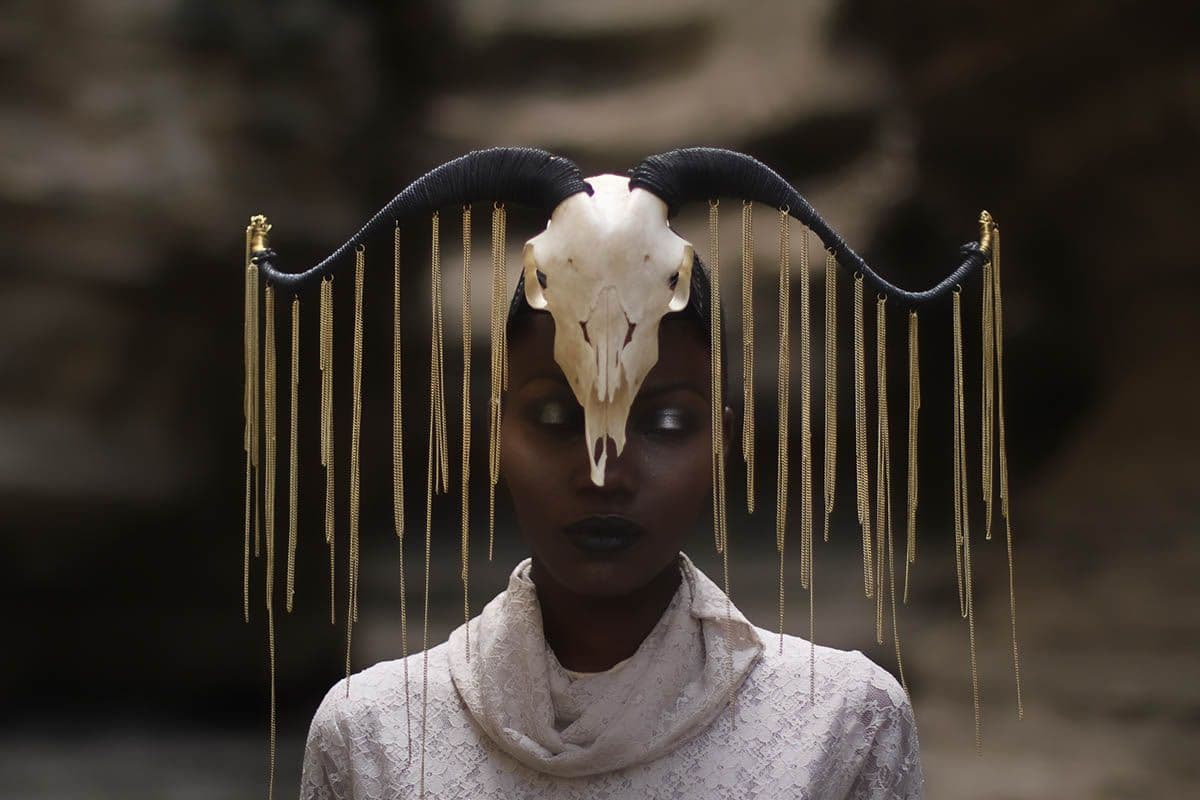
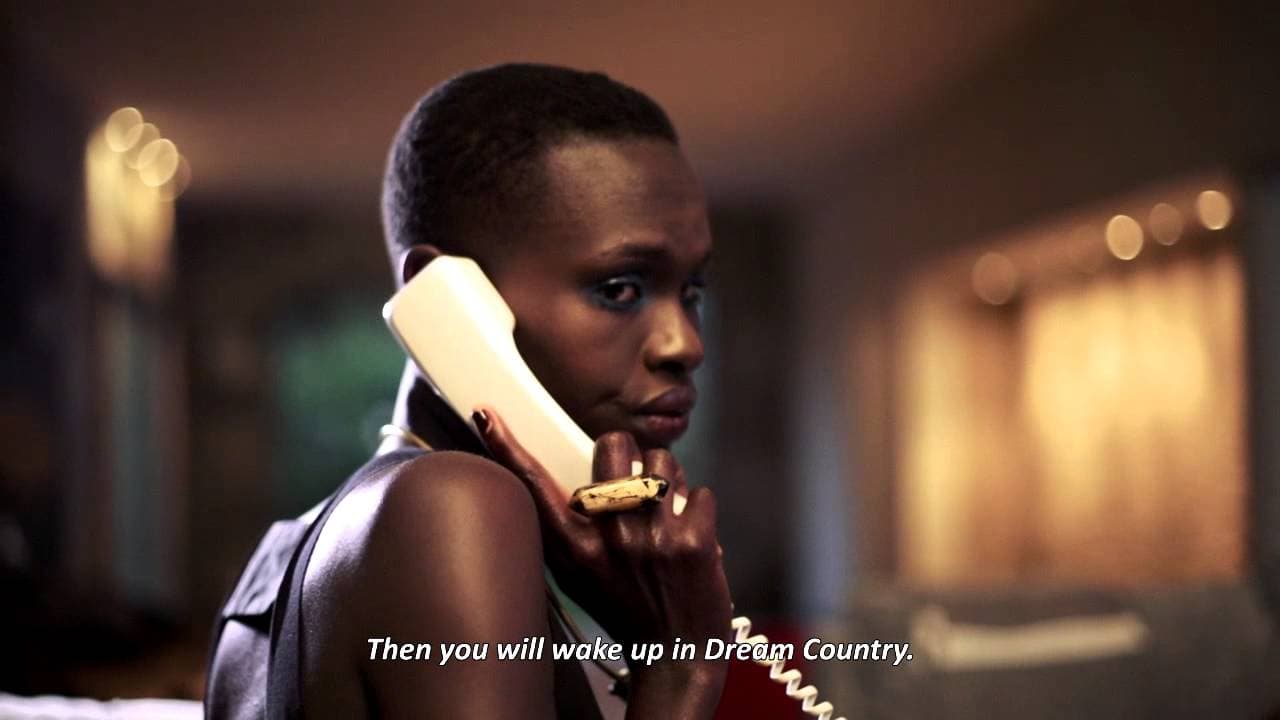
The inquiry begins with an old nostrum. An orpheusian yearning, Eurydicean frailty, Jungian reconnaissance, dream worlds and the brief katabasis into their subterranean logic: these are the mythological and psychic constructs we glean from Chuchu’s To Catch a Dream. A widow, Ajuma, plagued with grief and nightmares of a dead husband, takes solace in the folkloric panaceas. Seeking relief, she turns to an atavistic remedy for capturing dreams and succeeds in trapping one within a bag. The captured dream becomes her vestibule into the Land of Dreams, a strange country of the fabricated unconscious where Ajuma encounters psychopomps and deities, wandering through a boundless landscape suspended between the living world and the realm of the dead.
In Ajuma’s dream world, a nigh-replication of the The Myth of Orpheus and Eurydice transpires in more pernicious ways that defy the romantic denotations offered by Ovid but it is the article of clothing donned in this world that is striking. Ajuma and the creatures of this world are wearing the garments of the dead — cadaverous, skeletal, teeming with carmine, black and an occasionally lugubrious confluence of colors. Fashion in dreams is clothing liberated from the stifling machinery of social utility. Awake, a garment, as a language-object, tells us where a body belongs; in the dream, it can tell us where the psyche has been or what beckons it — be it a natural simulation of the mind or the annihilation of it. As a fashion film, we are bedazzled and regaled by the sartorial engineering but we are asked to consider the oneiric world as a psychopedagogical runway, a moiety in our consciousness where we get to engage in the pomp and pageantry of a Freudian cosmogony. Ajuma is rendered as a model on a runway of Dreams, a sign and a signifier of a new kind of katabatic maxim: abandon all hope, drape yourself in death.
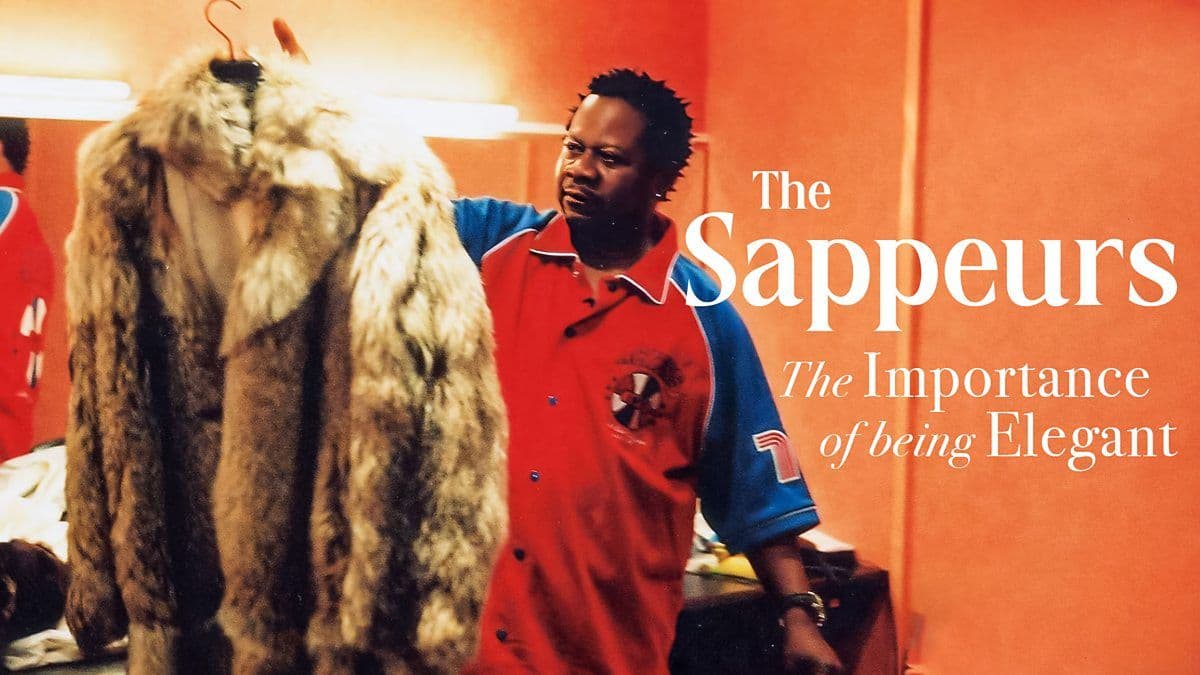
The Importance of Being Elegant gives us another ethos of this sartorial mythology. A cultic contrivance of sorts. George Amponsah and Cosima Spender follow Papa Wemba, the Congolese musician, Rumba Rockstar and spiritual figurehead of La Sape, whose flamboyance has acquired the constitutive properties of doctrine among his followers in Paris and Brussels. Here, the cult of personality, like some crooning Che Guevara, finds its most extravagant expression through clothing. Wemba's elegance morphs into an ideology that his acolytes reproduce through designer labels, elaborate ceremony and an almost devotional pursuit of his imprimatur. The garment is imbued with the charisma of the person who wears it, while the person himself becomes inseparable from the spectacle of his wardrobe. Fashion thus becomes a technology of celebrity, producing an image powerful enough to organise a subculture around its own mythology.
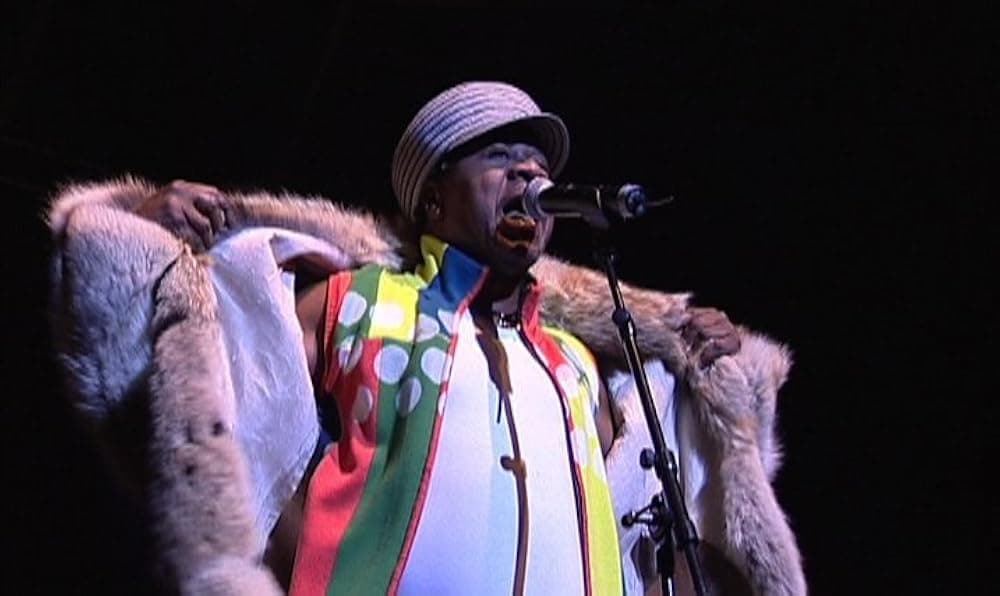
There is a thin line between religion and a subculture. Papa Wemba is called the “King of La Sape”; his followers pursue dedications from him, advertise themselves through one another and construct elaborate identities around the world of elegance he embodies. The film consequently reveals fashion as a peculiar form of social theology: the designer garments are sacramentalized, the stylist takes the visage of an ecumenical figure, and the celebrity becomes an object of collective devotion.What one wears can become a declaration of allegiance, an assertion of dignity and a performance of belonging. Elegance accrues a private mythology of its own, with Papa Wemba at its epicentre. Wemba is neither revolutionary nor apathetic to the political volatility of Congo, He's falstaffian in his gait but he's a seraphic crooner — a bard of the beaten and the damned. He's a miseducation of a disillusioned acolyte in Europe braving the harshness of self-imposed deracination, a cult of personality, a representation of the sapeurs’ fresh-to-death doctrine. In a heterocosm, he could have been president of the world, but he's rife with contradictions and repudiations, a live-fast never-die approach to the seriousness of life. He subsists on an allegiance to the material and the allegiance to others. To armchair semioticians such as myself, fashion is the avatar for such internal dialogue and dialectical warring.
In Ajuma’s dreamscape and Papa Wemba’s mythology lies a connective tissue: fashion has its spyglass into the internal and the external of our ensouled intentions. What we wear calls no truce but it does lay us bare for probing and psychoanalysis, historicizing and histiographing, the enterprise of agonising contemplation. They both bend the arc of what a fashion film can achieve— as an anthropological tool, as a pedagogical model, as a way to crystallize ways of seeing that may be otherwise lost to the tides of history.
Follow us for essays on Substack here.